Recognize
Read the situation.
Separate the real problem from symptoms, noise, and the story already attached to it.
 Weirdgears
iPhone · Managerial judgement
A field system for managers who must make a decision before certainty arrives.
Managers are not short of information. They are surrounded by dashboards, stakeholders, advice, competing priorities, and reasons to reconsider. The harder problem is knowing when understanding is sufficient—then deciding, communicating intent, acting, and following through.
RDAC turns that problem into a repeatable discipline: Recognize, Decide, Act, Check. It draws on military doctrine’s ability to work under friction and uncertainty, then translates it into ordinary management without military theatre or command-and-control language.
The result is a virtual field binder of situation cards, principles, checklists, decision routes, templates, and working stacks. It is there when the plan meets reality—not as another source of content to consume, but as a way to move.
Why it exists
Advice can improve analysis indefinitely. Management still requires someone to name the objective, accept responsibility, choose the next move, and discover whether it worked. RDAC keeps that decision boundary visible.
Recognize
Separate the real problem from symptoms, noise, and the story already attached to it.
Decide
Clarify the objective, authority, standard, trade-off, owner, and next decision.
Act
Communicate clearly, assign ownership, use the right field sheet, and move.
Check
Set a review point, look for drift or friction, and adjust rather than defend the plan.
RDAC in thirty seconds
The overview follows one field card through action, search, nearby doctrine, and a working stack. It shows the app as a management instrument rather than a course, chatbot, or task manager.
30 seconds · Music only
Inside the field system
RDAC is organized around recognizable situations rather than a syllabus. Find the right sheet, act from it, move laterally into related doctrine, and keep the live set together. Tap any screen for a closer look.
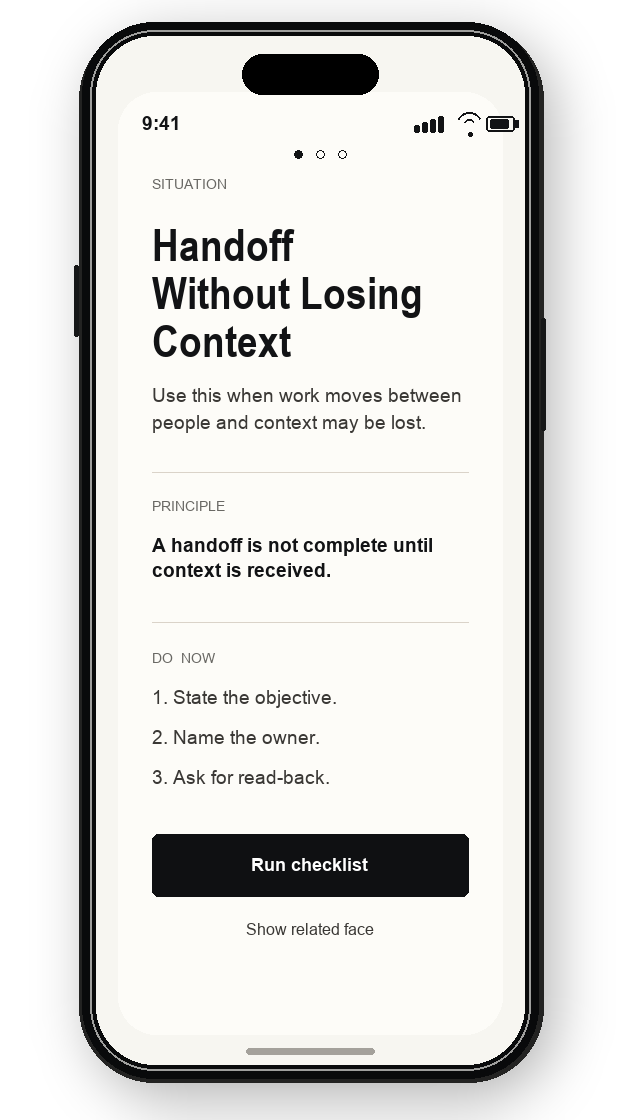
A situation card makes the operating principle, immediate steps, and usable artifact visible without first requiring a lesson.
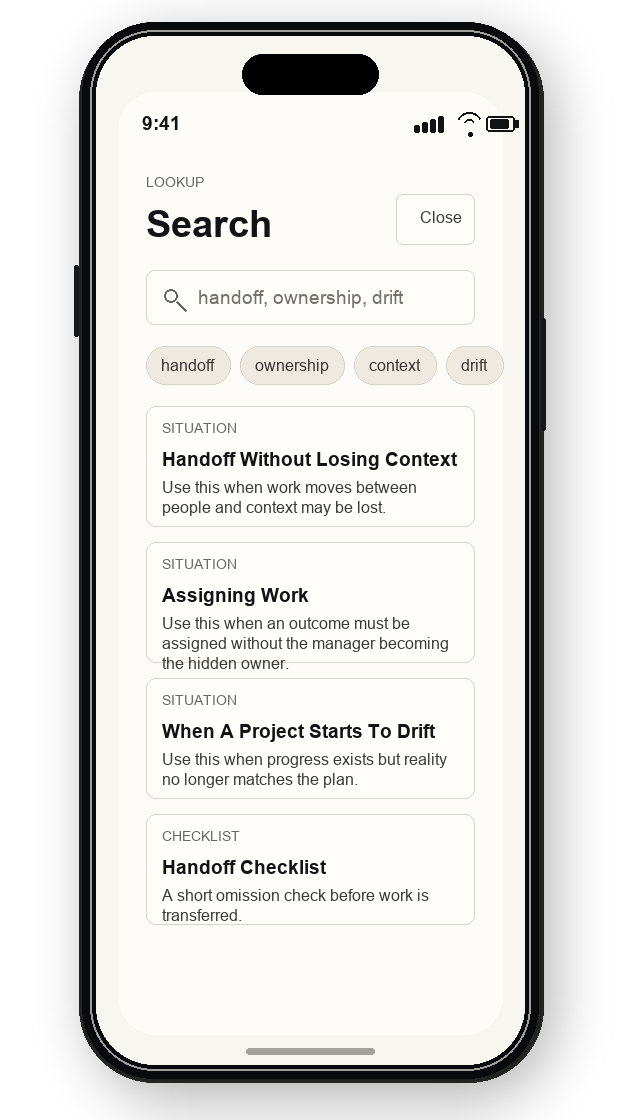
Lookup begins with symptoms and working language—handoff, ownership, drift—not with a demand that the manager already knows the doctrine’s table of contents.
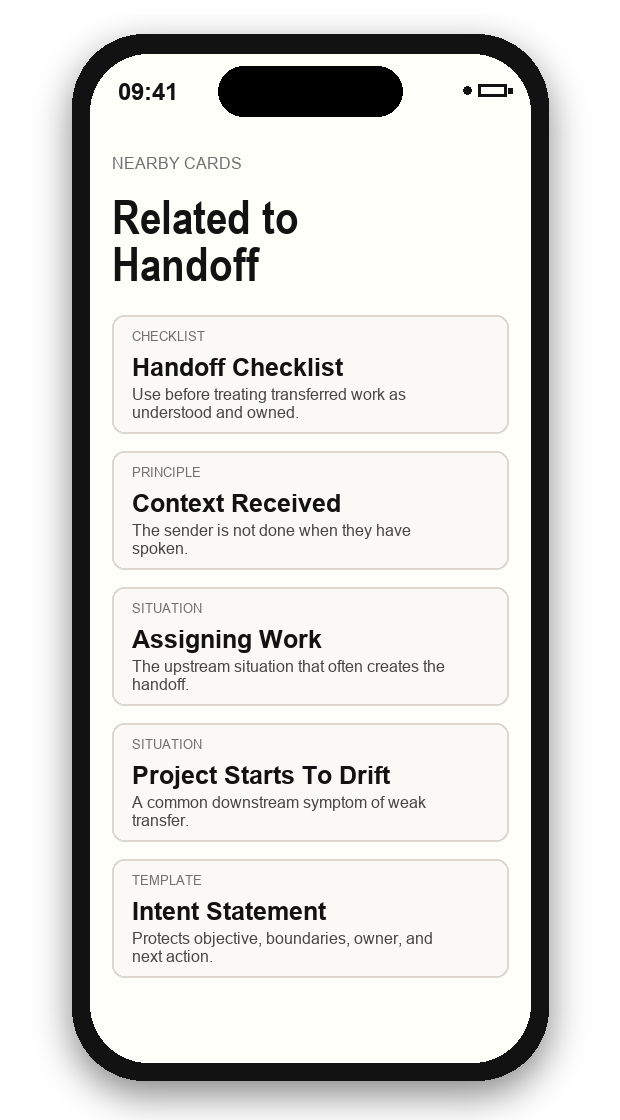
The current situation leads directly to its checklist, governing principle, adjacent situations, and relevant template without becoming a linear course.
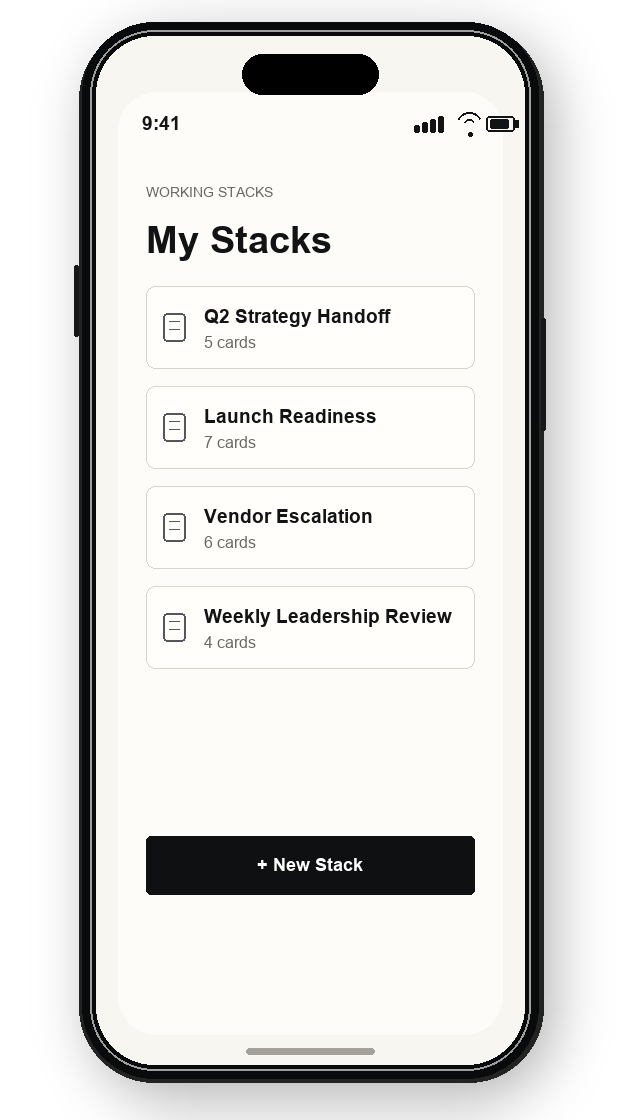
Working stacks collect the doctrine relevant to a live issue. They remain a field packet, not a project tracker or hidden record of operational content.
The product boundary
RDAC can help a manager diagnose a situation, compare routes, prepare a checklist, or shape an output. It does not pretend that advice—whether written by an expert or generated by AI—removes responsibility for judgement.
It is also a field-reference system, not a records system. Operational notes, personnel details, filled decision briefs, and case histories do not belong inside RDAC. The app helps move useful blank artifacts to paper, email, Word, or the system where the work already lives.
Read the full RDAC rationale